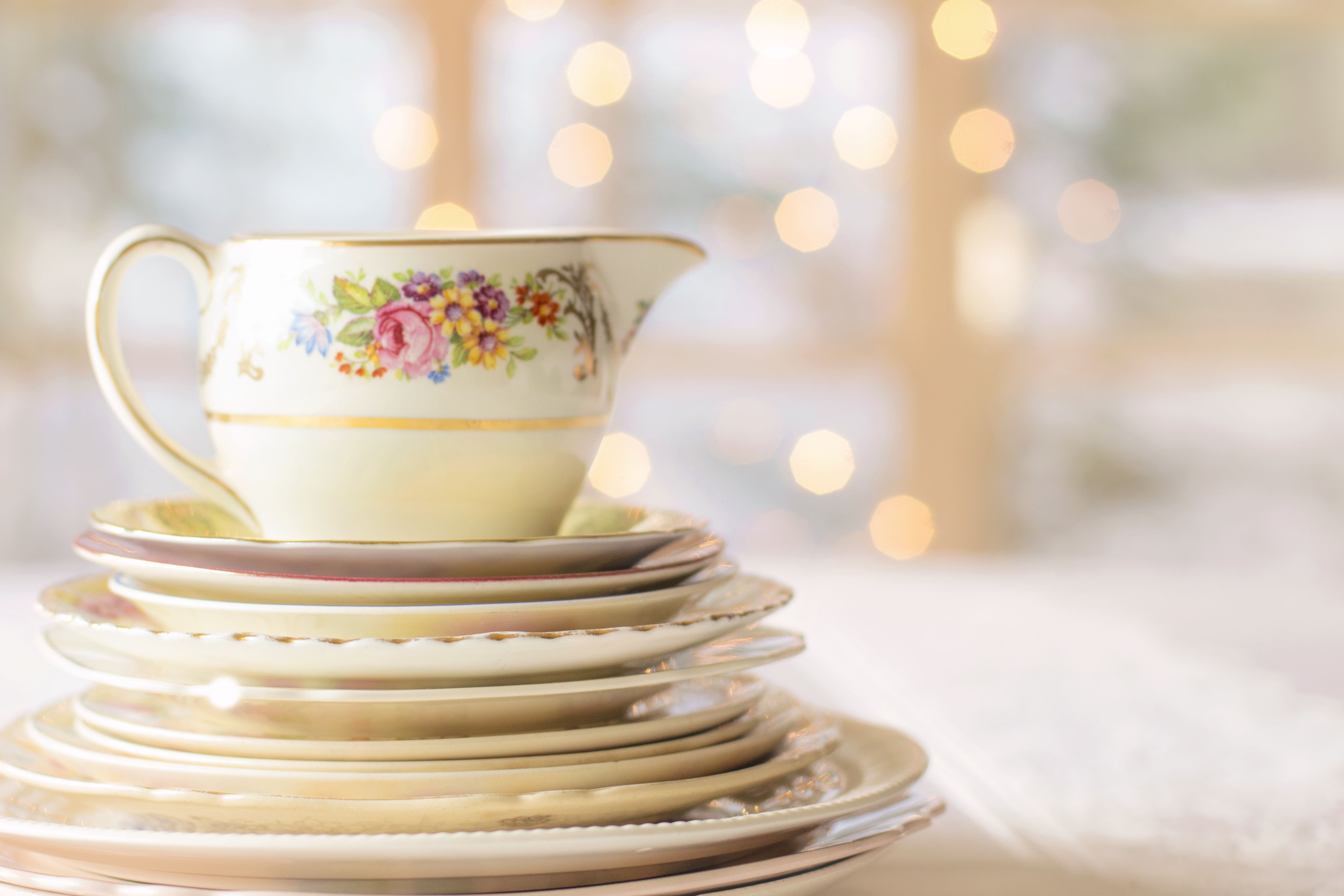
There comes a time in life when you realize your children and grandchildren only want your love and respect, and possibly your riding mower if it’s newish.
They do not want your grandmother’s china. When your time is up, they will probably toss that 40-year-old corded drill, even though it still works. Tools these days are battery powered, so they probably won’t need that 100-foot-long heavy-duty extension cord either.
It doesn’t matter if they’ll inherit a hundred thousand dollars or two million bucks from your estate, they prefer you root through and dispose of items that are not particularly valuable, including some you have spent forty years protecting.
That antique china? Don’t be shocked to learn they don’t want it. As children, they couldn’t touch a plate without supervision. As adults, they may not touch that antique plate without a court order.
“But these are perfectly good dishes,” you explain.
That’s the problem. They’re too good to use, too fragile to put in the dishwasher, and too numerous to hide in their china cabinet.
“Fine. Then I’ll save the china for your kids,” you tell daughter.
Don’t do that. Your kid, now middle aged, is too busy protecting her stuff the grandchild will presumably have to sort through some day.
We saved them for special occasions, but few occasions, if any, ever became special enough to justify handwashing twelve tiny cups nobody could fit a respectable amount of coffee into.
Meanwhile, we ate Thanksgiving dinner off everyday plates while the good china watched from behind glass, like wealthy relatives who declined to help.
In Florida, this situation often reaches a crisis when people downsize.
For boomers, downsizing is the process of moving into a smaller home while insisting that overstock from the larger home will fit in the garage.
We call this storage.
The car, parked outside, calls it betrayal.
Clutter is not safe. Florida is home to the Lightening Hockey team, but the state was famous for its lightning long before the team arrived. We lose power during thunderstorms - it’s why most boomers keep an emergency flashlight. But finding it in the dark behind the portable ice maker - that we figure will come in handy even though we’ll probably never entertain more than six guests again - can be a daunting task.
My wife belongs to the school of thought that an object should remain in our possession until all conceivable future uses have been investigated. Some people might call her a packrat. I prefer “director of acquisitions,” especially when she’s within hearing distance.
An empty container is never empty. It is full of possibilities.
A ribbon might be needed. A button might match something. A box is a perfectly good box, which is apparently the highest distinction a box can achieve.
“Somebody could use that,” she says.
I would criticize this more vigorously if I didn’t own a collection of cords belonging to tools that I can no longer identify.
I cannot always remember which tool goes with which cord, but throwing one away would almost certainly cause that tool to appear the following morning.
It’s no wonder why Gen Xer’s love battery powered devices.
I keep screws, brackets, and small metal objects whose original purpose is known only to an unknown engineer who probably retired in the eighties.
My wife sees junk. I see the difference between fixing something someday and another trip to the hardware store where customers often think I’m an employee.
Naturally, neither myself or the wife recognizes the other’s reasoning as legitimate.
Her things are clutter. Mine are supplies.
The trouble comes when we offer our treasures to the next generation.
“Would you like this dinghy boat.”
The son looks at me with the expression of someone being offered a live goat.
“Where would we put it?”
This is an unreasonable question. We never let it stop us.
“It’s an inflatable; just let the air out.”
“But we live on a lake, and I have a pontoon boat,” says the son. Then comes the crushing suggestion: “Couldn’t you sell it?”
“Sell it?” you reply with measured indignance. “It doesn’t leak, and I’ve even got a trolling motor. I was going to take drone videos of dolphins. Just never got around to it.”
Beneath protecting all this stuff is something harder to sort.
A chipped serving bowl can hold the memory of a mother setting dinner on the table. An old toolbox can bring back the memory of a father. The dinghy taking up space in the shop might represent a hobby that once inspired.
We say, “It’s still perfectly good,” because saying, “I miss the person who used it,” or, “I miss a certain hobby,” feels considerably more complicated.
Sometimes we’re keeping the evidence that we were loved by someone who is no longer with us.
Our children have memories too. Someday, their children may dread going through their clutter. It’s all part of the cycle of life.
Perhaps we could tell them the stories before handing them the inventory. Write down who owned the bowl. Explain why the video or photograph matters. Let them choose something small without interpreting their refusal of the rest as a rejection.
I’m considering this enlightened approach myself.
First, I’ll deflate that dinghy that takes up an entire corner of my shop.
There are several boxes in it, but going through them shouldn’t take long.
Unless the contents are perfectly good stuff.